Thursday, 8 January 2015

10 best branded Instagram videos from December 2014

There’s even less Christmas cheer in this collection of Instagram videos from December than there was in our monthly Vine round-up.

In fact there’s only one festive themed example here, with New Year’s Eve providing much more inspiration.

Nonetheless there’s plenty of creativity on offer...

Coca-Cola

Happy New Year from Coca-Cola. A brand suggesting you drink its product at midnight rather than desperately scratching around your neighbour’s recycling bin looking for some remnants of Prosecco.

Oreo

Happy New Year from Oreo. A brand suggesting you eat its cookie balls at midnight rather than 17 mini quiches and a cold slice of Hawaiian pizza with a cigarette stubbed out on it.

Virgin America

Happy New Year from Virgin America. A brand suggesting you spend midnight on an airplane rather than watching Jools Holland at your aunty’s house which smells of dog.

I had a great New Year, why do you ask?

LEGO

Santa’s reaction to the elf eating his cookies is worryingly jolly, to the point where you think something nasty will happen off camera.

Or maybe I’ve watched too many gangster films.

General Electric

GE has begun using a voiceover artist whose voice can only be described as ‘powerfully authoritative and takes his own damn time with it’.

GoPro

If GoPro has done nothing else, it’s perfected instilling an audience reaction of “WHAT THE HELL IS WRONG WITH YOU ARE YOU CRAZY?”

MINI

MINI seems to be slicking up its social video operation, which is a shame as I quite liked its funnier stuff.

Maybe MINI has only just watched Drive and is now getting Gosling obsessed. The next stage is buying a bomber jacket with a scorpion on it.

Red Bull

The extreme sports pioneer that also has a sideline in energy drinks has chosen this holiday season to publicise its exclusive premiere of Skrillex’s new video.

Which is why it sounds like you’re listening to a sack of Jack Russell terriers being thrown from a plane. (Joke courtesy of a friend).

Beavertown Brewery

The London based brewery shows you how beer is put in a can. There’s also a fire safety training video elsewhere on the channel that is much less sensible.

Samsung Mobile

Samsung pushes us another step closer to making The Lawnmower Man a reality. Then with any luck Tron.

For more mini branded social videos, here are our best Instagrams videos of 2014.

What have we learnt about click and collect this Christmas?

Click and collect felt inescapable this December.

Just on my half hour walk to work I would see multiple ads for eBay’s partnership with Argos, John Lewis and Tesco promoting their click and collect services on bus stops and in shop windows.

One piece of research published in October made the bold prediction that 95% of online shoppers will use click and collect over Christmas 2014, more than double the percentage who used it in 2013.

Although the Postcode Anywhere survey of 2,400 online shoppers seemed rather optimistic, it’s a customer service trend that’s definitely worth being positive about.

Click and collect gives the customer almost complete control over delivery as they can pick up purchases when and where they choose. For added convenience it’s also free.

Post Christmas analysis

According to JDA/YouGov research published today 39% of online shoppers opted to use click & collect services this Christmas.

A percentage substantially lower (-56%) than the figure predicted by the Postcode Anywhere survey. It’s also 6% lower than the number we reported in our Christmas 2013 survey: 45% of UK online consumers used click-and-collect for Christmas shopping.

Out of the 2,400 shoppers surveyed, 61% of those that used click and collect cited avoiding delivery charges as their biggest motivation and 53% cited the greater convenience offered.

More than a third (34%) stated that they would use click and collect again next Christmas.

Again these figures are much lower than expected, but perhaps slightly more worrying are the low levels of customer satisfaction.

Although 40% of click & collect shoppers had a very positive experience of using the service, 35% of users encountered negative issues:

  • 30% experienced long waiting times due to a lack of in-store staff.
  • 29% cited a lack of a dedicated area in-store for click and collect purchases.
  • 25% said staff were unable to look or took a long time to source goods in-store.

Some major retailers were experiencing problems much earlier than December.

As David Moth reported in 'How are retailers promoting click & collect online?' Tesco had suffered a fulfilment disaster after failing to deliver many Black Friday click and collect orders on time. 

On the following Friday it displayed a banner notifying customers that due to “unprecedented demand” it was currently unable to provide next day click and collect deliveries.

Marks and Spencer had also been forced to withdraw its click and collect service, and deliveries to customers’ homes were delayed by up to two weeks as its new distribution centre failed to cope with Black Friday demand.

However there are major rays of optimism to be found elsewhere. 

Success for John Lewis

For the department store, click and collect overtook home delivery for the first time during Christmas 2014.

56% of John Lewis’s online customers chose to collect their goods from stores, rather than have them delivered to home addresses.

Total sales for John Lewis for the five weeks up to 27 December were a record £777m, up 5.8% on the same period last year.

As counter sales fell by around 1%, the growth can be entirely attributed to a 19% rise in online sales compared with Christmas 2013.

Ways to improve click and collect

Clearly it’s all about connecting the online proposition with the offline reality.

Many brands have an excellent approach to promoting click and collect, as evidenced by its ubiquity this winter, as well there being an increase in retailers adopting it as a delivery option.

However the user experience of click and collect differs in quality across various ecommerce sites. 

Schuh has clear CTAs on every product page allowing you to check stock in any branch, then you can either buy online and collect in-store, or reserve the item in-store and pay after you try them on.

Halfords on the other hand provides a confusing array of CTAs on each product page, meaning that the click and collect stock checker is easy to overlook.

John Lewis obviously has a very succesful click and collect service, but only mentions it on product pages for items that are available for delivery via this method.

As a result, shoppers may not realise that click and collect is available on alternative products.

Although these UX niggles are important to iron out, the key thing to achieve, as I mentioned earlier, is making the whole multichannel experience as connected and as excellent as it can be.

If a significant proportion of your online shoppers are choosing not to have their goods delivered to their home but to store, these customers will expect the same hassle-free, customer-focused experience on the high street store as they did online.

This means:

  • Providing a specific area with a customer service team to deal with click and collect enquiries (which in my experience TopShop’s Oxford Street branch does very well).
  • Ensuring there aren’t lengthy queues.
  • Keeping customers informed regularly on the status of their order.
  • Making sure opening times are clearly communicated not just in store but online and most importantly in direct email or text messages to the customer.
  • Make sure deliveries are clearly labelled and organised in stock rooms so that customers don’t have to wait too long.

Content Marketing Distribution: Pull vs Push (Chart)

Want your content distributed? Examine Content Marketing Distribution: Pull vs Push. Here are 20 different types of content distribution and 11 content tips.

The post Content Marketing Distribution: Pull vs Push (Chart) appeared first on Heidi Cohen.

#052: Shady Review Practices

Subscribe on iTunes RSS Feed On this episode of the UnPodcast we talked about a hotel in Sweden that offers free hotel rooms (with a catch!) to those who have enough social media fans — and why that may not be a smart move for them. We also talked about how one large company lost […]

Wednesday, 7 January 2015

Will Content Finally Become A Marketing Department? (And 16 More 2015 Predictions)

By NewsCred Contributors, Kylie Jane Wakefield and Lauren Mangiaforte There were a lot of digital marketing changes in 2014. Companies got serious about content marketing, brands and publishers embraced native advertising, millennials were pushed into the spotlight, and big data made it possible for content creators to figure out exactly whom they were targeting. More than ever, marketers focused on providing valuable content to their consumers, and making it accessible on every platform, including mobile. With companies globally spending an estimated $135 billion on content marketing in 2014, staying ahead of the curve and seeing down the road isn’t only wise [...]

The post Will Content Finally Become A Marketing Department? (And 16 More 2015 Predictions) appeared first on B2B Marketing Insider.

Five New Year’s resolutions for marketers

It may not seem all that surprising, but research shows that only 8% of people who make resolutions each January actually achieve them.

However, no matter the success rate, each year we make certain promises to ourselves to be better than we were the year before – both in our personal and business lives.

Some of the most common resolutions for bettering oneself are not all that far off from our brand goals. Read on to learn how marketers can apply the most common new year’s resolutions to 2015 marketing plans. 

Resolution #1: Update your look

Bored with your hair style? Your wardrobe? The beginning of the year is the perfect time to switch up your look for a confidence boost.

When it comes to your marketing campaigns, there’s no need to reinvent the wheel, though. Instead, think about simple updates you can make to breathe new life into your brand and get you noticed.

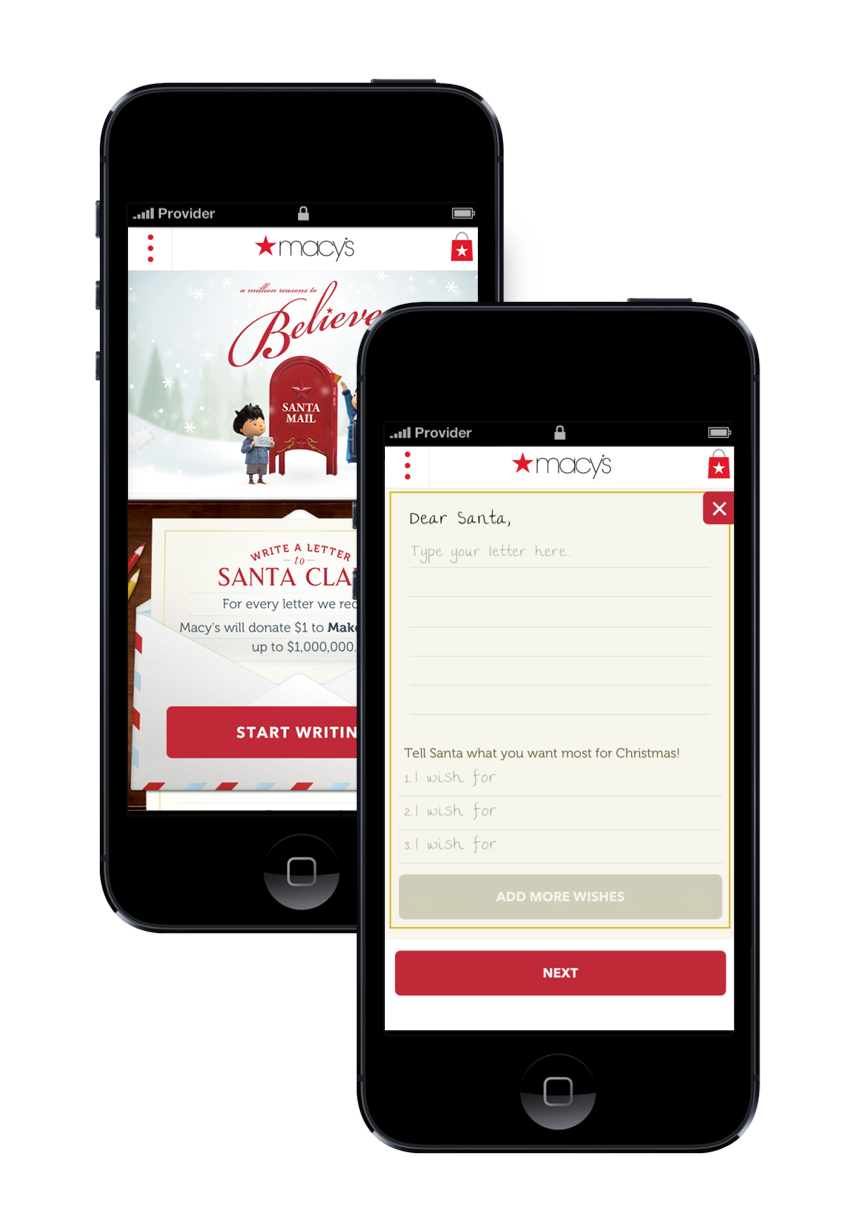
Macy’s annual Believe campaign was a customer favorite, a program that allows customers to drop their “Letters to Santa at the North Pole” at Macy’s stores.

This year, though, the campaign was brought into the digital world by allowing customers to submit their letters online through their computer or mobile phone. For consumers who preferred to send Santa a handwritten letter, Macy’s provided a digital solution for the traditionalist by providing downloadable stationary for letters to Santa.

This update to the campaign allowed Macy’s to engage more of their customers through the addition of other online-only features, and by extending the reach of the campaign beyond just those customers who live near a Macy’s store.
2: Break out of a rut

The start of a new year is the perfect time to shake things up, to do things differently and take a fresh approach. And, you guessed it: it’s the same for marketers.

A new year, a new budget: time to try something new. There are many ways to do this, from integrating mobile into your program to starting completely from scratch.

For example, Foursquare, the location-based social networking app, realized they had a branding issue earlier in 2014; the company had relaunched with new and improved capabilities but consumers weren’t aware of what these new capabilities were or what they meant.

The company invested in its first-ever brand campaign to educate consumers on the new Foursquare functionality and uses.

FourSquare already had over 50m users as a location-sharing app, but when it integrated personalized recommendations, the company realized it needed to market those capabilities in order to educate existing users and attract new ones. Switching up strategy can be the key to continued relevance.

3: Be more organized

Almost every one of us has vowed to be more organized going forward. In this age, we often have more data than we can process even with every imaginable device. Create a plan to leverage and organize your data, in order to optimize your current and future programs.

Kimpton Hotels unified multiple data sources to create a holistic customer view for their Karma Rewards program. Instead of creating loyalty tiers based solely on hotel stays, Kimpton based a member’s status on 200-300 different behaviors.

These behaviors include traditional ones, such as booking a room on Kimpton’s website, social media behaviors, such as tweeting about Kimpton and what a customer does during their stay, such as attending an exercise class or even bringing their pet with them.

Through tracking behaviors in different customer groups, Kimpton gained valuable insight into what rewards were working and which were not, ultimately allowing them to optimize their rewards programs to better engage consumers. 

4: Volunteer and give back

‘Tis the season to give thanks and be inspired to give back. Many brands have corporate social responsibility programs, or causes that are particularly close to the heart.

By partnering with a non-profit organization, you can elevate your brand profile, help raise awareness for a good cause, and appeal to your audience emotionally.

A good way to do this? Agree to donate to your chosen non-profit each time a customer interacts with your marketing campaign.

5: Be a more engaged friend

Today, more often than not we find ourselves nose down in our phones, multitasking during valuable time with friends and family. For many of us, 2015 may be the year that we finally make the effort to really engage with our friends, be more loyal and live in the moment.

As a marketer, are you simply creating transactions, or doing things that build long-term affinity? Take a page out of Belk’s book: the southern lifestyle retailer made a commitment to engage with their consumers on an ongoing basis -- even without a traditional loyalty or rewards program.  

In February of this year, it launched Share Your Love Story, a campaign aimed at brides-to-be. Then in late summer, the retailer launched a back-to-school campaign for teens and families. For the holidays, Belk just ran a Santa-themed engagement campaign.

Year-round promotions engage the customer on a regular basis with emotional and personal touchpoints, building ”friends” for life.

January is filled with goals and intentions for the new year. With the worthy, yet sometimes daunting aspiration to do - and be - better than you were before, it’s easy to lose sight of how to start. Be simple and start small and press refresh for a 2015 that is well-organized, and wildly successful.

10 essential features for travel websites

The time between Christmas Day and January is peak holiday booking time, as anyone who saw an ad break on Boxing Day can probably attest to.

In fact a recent report by Hotels.com predicted that traffic to UK booking websites would peak at 8pm on 28 December, a Sunday night which for most people would be their last evening before heading back to work the following day.

The Sunday night surge isn’t uncommon. Skyscanner revealed last year that it sees a regular spike in searches on its mobile app at the end of each weekend throughout the year. Whilst the peak time for flight bookings is Monday lunchtimes between 12pm and 2pm on a desktop computer.

Clearly we’re happy to research holidays on a mobile device, but not quite ready to commit to paying for one on our smaller screens. It’s either that or the Monday morning grind is just what we need to tip us over the edge.

According to the Telegraph, Thomson and First Choice reported record traffic over Christmas and Boxing Day, with nearly 940,000 researching holidays on the internet. A 30% rise on last year.

To ‘drill down’ into the stats even further, the most popular time for holiday searches on Boxing Day was apparently between 9pm and 10pm during the Birds of a Feather Christmas special. Although this may be down to the characters flying off to the Canary Islands rather than a desperate need for viewers to find something better to do while it was on.

In order to capitalise on this December to January peak, travel companies need to make sure its websites are making the online customer journey as quick and painless as possible and that holiday information is easily accessible and searchable.

Let’s take a look at some key features that travel sites should have.

Straightforward search filters

Such as these from Secret Escapes, which serve you destination results updated in real time based on the boxes you tick.

Predictive search

Mr and Mrs Smith has a predictive search which provides results based on hotel names, the city as a search category and other hotels within that city.

Huge beautiful images

Airbnb showcases its users locations incredibly well with screen-filling glory. You’re also not bombarded by rows upon rows of thumbnails, just a handful of well-chosen pictures, which you can cycle through at your own pace.

Customer reviews

An integral part of all retail experiences, consumer reviews are an effective sales drivers, and a trusted source of information for users, unfortunately very few hotel brands seem to use them as our editor Graham Charton discovered in September.

Graham went on to suggest that people know sites like TripAdvisor exist and, if sites don't have reviews, they'll find them there anyway. Certainly aggregator sites are less concerned about negative reviews than hotel chains.

Hotels.com uses review scores on the homepage and search results pages, with links to the individual reviews via the text...

Search results can also be filtered by star rating.

Favourites list

If you haven’t settled on a destination yet, a favourites list is a very helpful tool, which allows you to remember the places that briefly took your fancy earlier in your search.

Voyage Prive has a favourites button clearly positioned at the top of each listing, as it recognises that a great deal of its customers are browsers without a set destination in mind.

Simple, idiot-proof calendars

Skyscanner has a great easy to view calendar for arrival and departure dates, which pops out off the departure and return fields. Also note the bright green selection colour which stands out clearly, the retention of previous and next months days and simple today, tomorrow and in a week buttons.

Clear pricing without hidden fees

Nothing makes a visitor bounce quicker than unexpected charges and taxes. Despite its insistent, upselling tactics, EasyJet is clear about its pricing throughout the customer journey. 

Use evocative and interesting copy

Many different operators are offering holidays to similar, if not identical destinations, so stand yourself out from the crowd with some well written descriptions.

As discussed in five evocative examples of ecommerce copywriting Onefinestay has a particularly poetic leaning.

Google map integration

It’s helpful to see available holidays laid out on a map, especially one that’s fully interactive and lets you see the details of the destination selected with an arresting image.

Simple checkout

Finally let’s go back to Graham Charlton and his post on Airbnb...

Creating a great user experience is wasted if your checkout contains various barriers to purchase and travel sites do have a habit of over-complicating checkout. 

Airbnb deals with registration well, making it as painless as possible, and continues the good work with a clear and simple checkout form. 

The form is well designed, data entry is easy enough and there are no unnecessary form fields or conventions on things like postcode formats.